
The information provided in this article is for educational purposes only and should not be considered as medical advice. It is essential to consult a healthcare professional before choosing or switching to a particular infant formula. The recommendations in this article are based on general research and are not intended to promote any specific brand or product. Breastfeeding is strongly encouraged by the World Health Organization (WHO), and infant formula should only be used under appropriate circumstances and medical advice. Breastfeeding is the gold standard for infant nutrition, and this guide is meant to help parents who require or choose formula feeding make informed decisions. By using our website, you agree to the terms of this disclaimer. For more details please go to our Disclaimer Page.
Hey mummies (and daddies)! I’m Elissa, a first-time IVF mummy to a cheery (and very active!) 17-month-old toddler girl. As new parents, I understand how we all want to give our babies the very best, and that includes choosing the right nutrition to fuel their growth and development. While breast milk is undeniably the gold standard, for some mummies, formula feeding is a real necessity. Whether you’re exclusively formula-feeding, supplementing, or transitioning from breast milk, navigating the world of infant formula can feel overwhelming. Fear not! This infant formula comparison guide is here to help you understand the different options available in Singapore and find the perfect formula fit for your little one.
My personal experience with infant formula? My baby had to be supplemented with formula milk early on as she had a condition which made it very difficult for her to latch. Unfortunately, despite our best efforts (and help from multiple lactation consultants) we were never able to help her latch. I worked hard to build my breastmilk supply which thankfully started to be sufficient around week 3. Months later, we also supplemented with infant formula because we were going to be travelling and my milk supply was started to drop. But once baby hit 1 year old, I made the switch over to UHT milk (mixed feeds with breastmilk until she eventually weaned off fully at 15 months).
Now let’s dive into the world of infant formula!
Infant Formula 101: A Crash Course for New Parents
What is Infant Formula?
Think of infant formula as a specially created food designed to meet the nutritional needs of babies between 0-12 months of age who aren’t breastfed. It’s made from cow’s milk, goat milk, or soy protein, along with added vitamins, minerals, and other essential nutrients to provide baby’s with the nutrients they need.
This is different from toddler formula (formula milk for after 1 year old)- which I personally do not use for my own kid. But that deserves a whole other article in due time.
What Types of Infant Formula Are There?
- Cow’s Milk-Based Formula: This is the most common type and is generally suitable for most babies.
- Goat’s Milk-Based Formula: Can be used as an alternative for babies who may be sensitive to cow’s milk or have sensitive stomachs.
- Soy-Based Formula: This is a good option for babies with lactose intolerance or a family history of cow’s milk allergies.
- Hypoallergenic Formula: This type of formula is broken down further to minimize the risk of allergic reactions in babies with sensitivities.
- Follow-up Formula: Designed for babies after 6 months as a complement to the introduction of solid foods in their diet , it has a slightly different nutrient composition to support their growing needs.
Stages of Infant Formula:
Infant formula is typically categorized by stages based on a baby’s age and development:
- Stage 1 (0-6 months): This is the starting point for most newborns.
- Stage 2 (6-12 months): This formula provides additional nutrients for babies exploring solid foods.
- Stage 3 & above (12 months and older): These are termed Toddler Formula (different from infant formula). This is usually NOT required as part of baby’s diet once toddler is getting sufficient nutrients from solid foods. Experts recommend switching over to fresh milk or UHT milk after 1 year old.
Remember, this is a general guideline. Your paediatrician can advise on the best stage for your baby’s specific needs.
Ingredient Breakdown: What’s in Your Baby’s Formula?
Don’t be intimidated by the long ingredient list! Most formula brands share the same core ingredients, just in varying amounts. Let’s explore some key components:
Macronutrients:
- Proteins: Building blocks for growth and development.
- Carbohydrates: Provide energy for your baby’s growth and activities. Lactose is the primary carbohydrate in breast milk, so many formulas use lactose as the main source of carbohydrates.
- Fats: Essential for brain development and nutrient absorption.
Micronutrients:
- Vitamin A: Supports immune function and vision health.
- Vitamin B: Aids conversion of food into energy.
- Vitamin C: Promotes growth, aids in tissue repair, and protects cells from damage.
- Vitamin D: Enhances calcium absorption and contributes to the development of strong bones.
- Vitamin E: Supports the immune system and improves blood circulation.
- Vitamin K: Essential for proper blood clotting and promoting bone health.
- Calcium: Crucial for the development of strong bones and teeth.
- Zinc: Contributes to the development of taste and smell, and supports overall growth and development.
- Iron: Vital for growth and development, and plays a key role in various bodily functions. The American Academy of Pediatrics recommends iron fortification in formulas because many infants have insufficient iron levels.
Common Additives:
- DHA and ARA (Omega-3 & Omega-6): Fatty acids believed to support brain and eye development.
- Prebiotics and Probiotics: These friendly bacteria promote gut health and digestion.
- Human Milk Oligosaccharides (HMOs): Some types of HMOs, such as 2′-Fucosyllactose (2’FL) and Lacto-N-neotetraose (LNnT), are added to mimic the benefits of the HMOs naturally found in breast milk. These synthetically produced HMOs aim to make formula-fed babies’ gut microbiota more similar to that of breastfed babies.
Marketing Claims vs. Reality: What You Should Know
The infant formula industry is rife with marketing claims that can be overwhelming for new parents. Buzzwords like “closest to breastmilk,” “brain-boosting,” or “immunity-supporting” are commonly used, but it’s important to approach these claims critically.
Regulations and Oversight
In Singapore, all infant formulas sold must meet strict nutritional standards set by local authorities such as the Singapore Food Agency (SFA). This ensures that even the most budget-friendly options meet the necessary requirements for your baby’s healthy growth and development. Expensive formulas often contain similar core ingredients to lower-priced alternatives but vary in extras like DHA or prebiotics. What’s our government’s stance on this? See these statements made below for a rough idea.
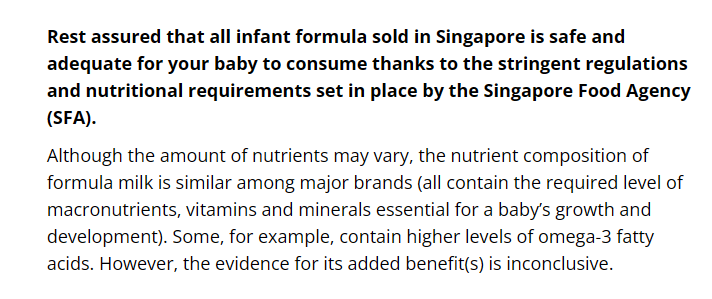
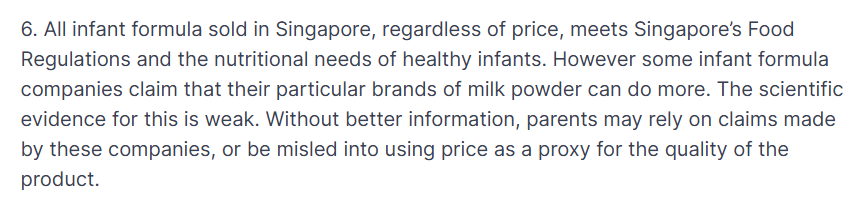
What Science Says
A study published by The BMJ of over 750 infant formulas globally revealed that many claims by infant formula products worldwide were not backed by robust clinical evidence.
Similarly, WHO’s Code of Marketing of Breastmilk Substitutes warns against misleading marketing practices and emphasizes that formula should only be promoted responsibly, ensuring parents receive accurate, evidence-based information.
Practical Advice
- Focus on your baby’s needs rather than the most advertised formula.
- Look beyond marketing claims and check the nutritional label for the ingredients that matter most to you.
- Consult trusted sources like your paediatrician, who can help you assess whether additional nutrients like DHA or probiotics are necessary for your baby.
Remember: Most formulas on the market in Singapore offer similar nutritional benefits, so don’t feel pressured into purchasing the most expensive or heavily marketed option. Feeding your baby well doesn’t have to break the bank.
Infant Formula Comparison: Nutritional Breakdown
To help parents navigate the world of infant formula, we’ve created a neutral comparison table of key nutritional components and pricing for a few brands of formulas sold in Singapore. The aim is to provide factual, unbiased information to aid in making the best choice for your little one. As all formulas meet regulatory standards, this table serves as a starting point for comparison rather than a definitive guide.
P.S I’ve only included the main macronutrients, vitamins & minerals, and some common additives for comparison because that was what mattered to me. For more detailed comparisons of other ingredients, you’ll have to do it yourself – because it’s ALOT more work that I don’t have time for hahaha.
The green highlights are brands that have more of a certain ingredient than the others. Disclaimer: These differences do not necessarily reflect overall quality or health outcomes. Highlighting differences in certain nutrients is meant to inform rather than rank formulas. Consult your paediatrician for tailored advice
My personal take? Since all brands sold in Singapore meet regulatory standards, parents should focus on individual needs and budget. See my #unsponsored choice below.

Disclaimer: This table is a simplified comparison and may not include all relevant nutritional details. Please refer to official product labels for complete information.
Infant Formula Comparison: Nutrition Aside
Now that we’ve gone through the nutritional considerations, here are some other considerations you might need to take note of:
Cost Comparison:
Budget-friendly options are perfectly acceptable choices. Remember, “cost-effective” doesn’t mean “inferior” as long as the formula meets all the necessary nutritional requirements – which according to Healthhub, they all do! Since formula is a recurring cost, you might want to consider something that works within your budget because it can be difficult to switch baby out from a formula they are already used to.
Ease of Digestion:
Some babies have sensitive tummies. If yours does, consider a formula with prebiotics or probiotics to aid digestion and reduce gas. Ask your paediatrician for recommendations.
Organic vs. Conventional:
Organic formulas are made with organic ingredients, but they may not necessarily be better for your baby’s health. While the choice of organic formula helps to reduce exposure to nasties like pesticides, it does not guarantee that the rest of the ingredient list is healthy too! So make sure to check the full ingredient list.
Specialized Formulas:
For specific needs like colic, reflux, or prematurity, consult your paediatrician about specialized formulas designed to address these concerns.
Choosing the Right Infant Formula for Your Little One: A Personalized Journey
Remember, every baby is unique, and finding the perfect formula might involve a bit of trial and error. Here are some factors to consider:
- Consult Your Pediatrician: They know your baby best and can offer personalized recommendations based on their health and development.
- Listen to Your Baby: Pay attention to your baby’s cues. If they seem uncomfortable or have digestive issues, it might be time to consider a different formula.
- Don’t Be Afraid to Switch: If one formula isn’t working, don’t hesitate to try another. It’s okay to experiment to find the best fit for your little one.
- Consider Allergies and Sensitivities: If your baby has a history of allergies or sensitivities, consult your pediatrician about specialized formulas.
- Budget: Formula is a recurring expense, so consider your budget when making a choice.
- Buy From Trusted Retailers: Buying infant formula from trusted retailers ensures authenticity, safety, proper storage, and compliance with regulations, protecting your baby’s health and nutrition
My Personal Choice of Infant Formula Milk?
When we had to supplement right out of hospital, we continued whatever the hospital was feeding her. But as a practical mum, when we restarted her on formula again months later, I decided to go with Nature Dairy One Premium as it was one of the affordable options with probiotics. We were also lucky that baby girl took to it on her first try at 9/10 months old– with no allergies, rejection or constipation issues. Thank goodness.
Even so, we only supplemented with it for a short while (we used only two cans) before we switched out to UHT milk when she was 1 year old. Learn more about why we did so here: Guide To Choosing the Best Full Cream Milk for Toddlers Singapore

The Bottom Line: Fed is Best!
Remember, the most important thing is to nourish your baby. Whether you’re breastfeeding or formula-feeding, you’re providing the essential nutrients they need to grow and thrive. Don’t let the overwhelming choices stress you out. Speak to a health professional for advice, and do what’s best for you and your baby.
By understanding the basics of infant formula and considering your baby’s individual needs, you can confidently choose the best option for your little one (should you need to!). Remember, every baby is different, and what works for one may not work for another.
Find this article useful? Do help share this article with your fellow mummy and daddy friends and spread the love! It’s not easy putting all this information together and I do hope for more to benefit from it! For more baby essentials and helpful tips, check out our other articles here:







2 Comments on “Singapore Infant Formula Comparison: How To Choose The Best?”