

The content on our parenting website is provided for informational purposes only. It is not a substitute for professional advice and should not be construed as such. We strive to provide accurate and up-to-date information, but the ever-evolving nature of parenting and healthcare may necessitate changes. By using our website, you agree to the terms of this disclaimer. For more details please go to our Disclaimer Page.
Entering the world of motherhood through a caesarean c section is a daunting journey. I remember vividly the mix of anxiety, and excitement as I prepared for my planned caesarean childbirth at TMC.
Prior to my EDD, many people tried to persuade me to try vaginal delivery since C section recovery would be tough. To be honest, while that scared me a lot, I knew my own personal needs and limitations pertaining delivery, hence I stuck to my guts.
In this article, I want to share my personal experiences and insights with the hope of guiding and comforting others. Whether you have similar worries about navigating through their c section healing process, or just want to mentally prep yourself, here’s something I hope is helpful!
Skip ahead to list of recommended essentials!
Understanding Caesarean C Section
A caesarean c section, often a planned or emergency procedure, involves delivering a baby through incisions in the abdomen and uterus. It often has a longer recuperation period compared to vaginal delivery due to the fact it is a major operation.
As such, understanding what the surgery entails, from preparation to recovery, is crucial for any expecting mother.
For more insights into the actual Caesarean c section delivery experience, please check out my other article. Planned C-Section Birth At Thomson Medical (TMC) with Bill Breakdown
C Section Recovery Advice That Did Not Help Me
While advice for C-section recovery is often well-intentioned, some common recommendations may not be helpful or even realistic for everyone.
It’s important to remember that each person’s recovery experience is unique. Here are a few pieces of advice that I got that were not useful in my case:
“You should be able to do everything you did before, quickly”. After a major surgery like a C-section, it takes time to regain strength and stamina. Your body needs time to heal, and it’s okay to take it slow.
“Avoid pain medication to keep your baby safe”. While it’s important to be cautious about medications, especially if breastfeeding, managing pain effectively is crucial for recovery. There are safe pain management options for breastfeeding mothers; consult with your doctor for the best approach.
“Pain is normal after surgery. It’s nothing serious.” While some discomfort is expected, severe or increasing pain can be a sign of complications. It’s important to monitor your pain and consult with your healthcare provider if it seems abnormal.
“You should start exercising soon to lose the baby weight.” Jumping into intense exercise too soon after a C-section can be harmful. It’s important to wait until your doctor gives you the green light and to start with gentle activities.
“The scar will take care of itself.” While C-section scars do heal over time, proper care is important to prevent infection and aid in healing. Neglecting scar care isn’t advisable.
Caesarean C Section Recovery Tips: Navigating Different Phases
Now to the important part, my personal experience and tips! For easier reading, I’ve broken down my recovery experience into 3 main phases – in hospital, at home and long term.
Recovery in Hospital (3-4 days)
Pain Management
After the surgery, pain management is crucial. I cannot emphasize this more! Don’t hesitate to ask your medical team for pain relief options that are safe for you. Especially if you are breastfeeding. I was on a rotation of 3 different painkillers of different strength, and it was really what helped me get through the pain.
Mobility
As challenging as it may seem, try to get up and walk a little as soon as you’re medically cleared to do so. This can help speed up recovery and reduce the risk of complications like blood clots. In my personal experience, it took me 2 tries to even stand up from a sitting position. And at least 3 days before I could walk without support. It might seem impossible at the moment, but trust that you will be able to get through it.
Rest As Much As You Can
One of the best decisions I made was to do away with visitors during the hospital visit. Without anyone to disturb me, I had plenty of opportunity to take a nap in the day. Also, we made the choice to have baby in the nursery during night time, so we could have undisturbed sleep throughout the night.
These two decisions resulted in a very well-rested me for the 3 days post my delivery and I believed helped me a lot in my recovery.
Seek Help On How To Breastfeed
Because of the position of the wound, breastfeeding your baby can seem difficult. What I did was to seek the advice of the lactation consultant who popped by on my first day and second day post delivery. We tried out a variety of different positions to figure out what worked without hurting me.
For more resources pertaining to breastfeeding, check out my SG specific compilation below:

Hydration and Nutrition
Stay well-hydrated and opt for light, nutritious meals to help your body heal. Don’t skip your meals because you’re too exhausted.
Recovery after C Section At Home
Pain Management
Even back home, pain management is key! Depending on your pain threshold, you will likely be on pain medication for 2-4 weeks after your surgery. C section is after all a major surgery, so there is NO shame at all for taking painkillers to manage the pain.
What helped me was writing out a schedule of when to take which medication (since I was given 3), and stick to it so I don’t end up in pain if I forgot and missed out on a dose.
On top of that, to minimize exerting my core when I had to get out of bed, I invested in a hospital bed – personally it’s a great buy and I’m so grateful that I made the impulsive decision to do so while I was in the hospital. What’s so great about it? The automatic levers help you move from lying to sitting position with minimal effort. Consider how many times you need to repeat that motion in a day. That’s how much pain it’ll help relive you from. But that’s also me being dramatic – it may not be as painful for you as it was for me. If you don’t have space for a hospital bed, you can consider adding bed rails like the old people kind to your bed to help in getting up! Again NO SHAME!!! Read more about it over at my post below!
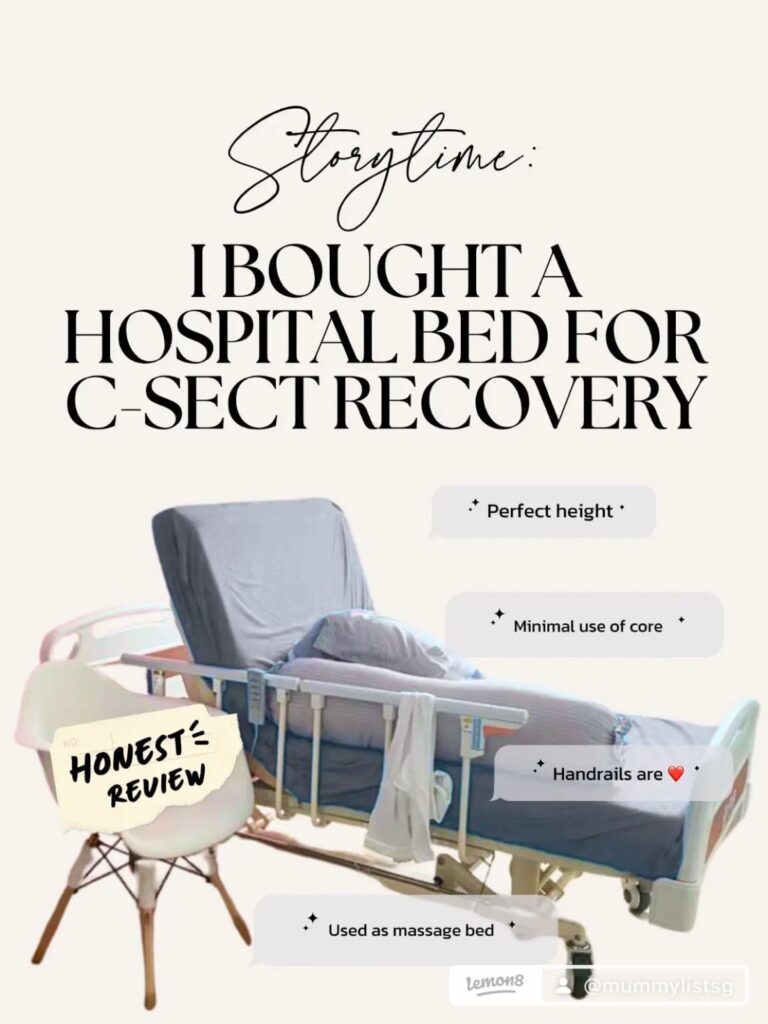
Tips: Laughing, sneezing or any activities that require core muscles will hurt A LOT during this period. I found that using an abdominal binder (this was the one I used) was very helpful in general, and that pressing a pillow against the wound when using any core muscles helped to alleviate the pain.
Rest and Heal
Give yourself permission to rest. Your body needs time to heal, so try not to rush the recovery process or overexert yourself to care for your child.
What helped me the most was to just delegate all the child caring and household tasks to my confinement nanny, helper, and my husband. For the first two weeks post c section birth, I was only responsible for pumping and breastfeeding my child. Everything else was left in the good hands of my amazing team mates.
Every time I had the opportunity, I took a nap. I truly believed all that sleeping helped speed up my recovery process.
Tip: Don’t shy away from asking for help. Whether it’s your partner, family, or friends, or hired help having a support system can be invaluable for managing household tasks and baby care.
Use Props to Assist in Breastfeeding
To avoid hurting myself while breastfeeding, I found that using a breastfeeding pillow (SHOPEE | LAZADA) helps to cushion the pressure on my wound. It also prevented the baby from accidentally kicking me in the wound.
Gentle Activity
Continue with light walking around the house. It aids in healing and can help prevent constipation and gas pains. Yes it may feel extremely taxing on your body to do so, but push on ahead if you can – without overexerting yourself of course.
Tip: Slow walking around the home also helped get rid of my post delivery water retention on my legs.
Scar Care
Keep the incision clean and dry. Follow the instructions given by your healthcare provider on how to care for your wound. In my case, it had a waterproof plaster over it, so I just took care not to let water seep in.
Once your wound has healed and with your doctor’s approval, you can start applying scar treatment creams and gel patches to minimize scarring.
Emotional Well-being
The emotional rollercoaster post-caesarean section was something I hadn’t fully anticipated. From overwhelming joy to unexpected bouts of sadness, the mental and emotional journey was as significant as the physical one.
Finding support in loved ones and allowing myself to process these emotions was essential for my overall well-being. In my case, I also continued to have my regular maternal wellness therapy sessions with Clarity Sg (as shared in my resources section) to help regulate my emotions during the period.
Long Term Recuperation At Home
As I moved further along in my recovery, focusing on long-term care became important. Being informed and proactive in these areas helped me feel more in control and reassured about my health.
Physical Therapy & Exercise
If you’re experiencing prolonged discomfort or issues with your abdominal muscles, consider consulting a physical therapist specialized in postpartum recovery.
In my case, I was quite stressed about the mummy pouch. Hence, once I was medically cleared, I started with postpartum massage to help. Also I started to do gentle pilates exercises at home centred around strengthening your core and pelvic floor.
Tip: Keep on your abdominal binder for as long as you can. I found it very helpful in keeping my tummy together so I used it for around 2-3 months post partum.
Monitor Your Health
Keep an eye on your incision area for signs of infection and continue regular check-ups with your doctor. I was fortunate enough to have mostly everything go quite smoothly at each check up but I’ve heard from other mummies that things can go awry as well.
My Recommended Essentials For C-Section Recovery
In case you’re too tired to read through everything, here’s my list of recommended essentials for C-section recovery based on my personal experience!
Comfortable Hospital Bed or Bed Rails
I personally used a hospital bed. But bed rails could be a good alternative too, if you already have a normal bed (not platform bed like mine which could not use bed rails.) These props help soooo much with getting in and out of bed without straining your incision and core (which hurt like a bitch during this period).
Kotex Disposable High-Waist Underwear
I cannot recommend this more! These Kotex underwear is easily one of my top buys during confinement that made changing out of my bloody underwear so much more easier. Soft and stretchy, these are perfect for providing comfort and coverage while avoiding pressure on the incision area.
Abdominal Binder
I bought a few in preparation before delivery but this hospital grade one given by Thomson hospital was the best for me. It was tight and adjustable enough to hold everything tightly together which helped alot with the pain during the initial recovery phase.
Compression Socks
I just used whatever the hospital gave me and my swelling went down within a week. It’s used to reduces swelling and prevents blood clots during the recovery period. Very essential but I would recommend to just use whatever the hospital offers.
Scar Patches and Gels
My gynae offered me both a scar treatment gel patch (for the initial days), and a scar treatment cream for after to promote healing and minimize scarring.
Breastfeeding Pillow or Prop
To avoid having baby kick or hit your wound accidentally while breastfeeding, I found that a breastfeeding pillowed helped a lot. I used this particular type which could adjust baby’s inclination, but there’s plenty of options out there! (SHOPEE | LAZADA) Check out what suits you best!
Comfortable Loose or High-Waisted Pants/Leggings
The c-section scar and hence pain is situated quite low, so avoid any low-riding pants. Think loose dresses, soft leggings, or high-waisted joggers that don’t rub against your incision.
Pain Relief Items
Aside from regularly taking your prescribed pain medication for managing discomfort, you can also opt to use heat packs to help with relieving some pain in a drug free manner. Avoid things like Salon pas/ Yoko-yoko during this period as they have chemical components NOT suitable for breastfeeding.
Wishing You A Smooth C Section Recovery Ahead!
While I find that sharing experiences help to offer other mother’s strength and understanding that they are not alone in this journey, it is important to note that each person’s journey through C-section recovery is different.
Do listen to your body, follow your healthcare provider’s advice, and not compare your recovery timeline to others.
Want to help in supporting other c section mothers through their postpartum period? Start by sharing more about your C section recovery experiences in the comments below!
Find this article useful? Do help share this article with your fellow mummy and daddy friends and spread the love! It’s not easy putting all this information together and I do hope for more to benefit from it! For more baby essentials and helpful tips, check out our other articles here:



3 Comments on “Caesarean C Section Recovery Tips: What Helped & What Didn’t”